Marketplace research profile · open sources
Wethenorth Darknet
Wethenorth Darknet is the name associated with a region-focused catalogue with vendor reputation features. Discussed by public monitoring sources as a Canada-oriented service, but anonymous operation makes identity and continuity hard to establish. This page records public evidence, interface characteristics, documented hostnames, and source limitations. It does not confirm current status or instruct anyone how to use the service.
- Historical record
- Unverified status
- 1 documented hostname

Wethenorth Mirror history and public record
Most knowledge about anonymous marketplaces comes from fragments. Indexers record availability, users post screenshots, journalists interview sources, and authorities sometimes publish affidavits or seizure notices. Those materials do not carry equal weight. A dated court record can establish an enforcement action, while an operator announcement establishes only what an operator wanted readers to believe.
For WeTheNorth, the surviving record points to a region-focused catalogue with vendor reputation features. The name appears in ecosystem reporting, but a shared name does not prove continuous ownership. Clones and phishing copies frequently imitate visual identity. References to this service should therefore include dates and avoid treating branding as authentication.
What did the interface make visible?
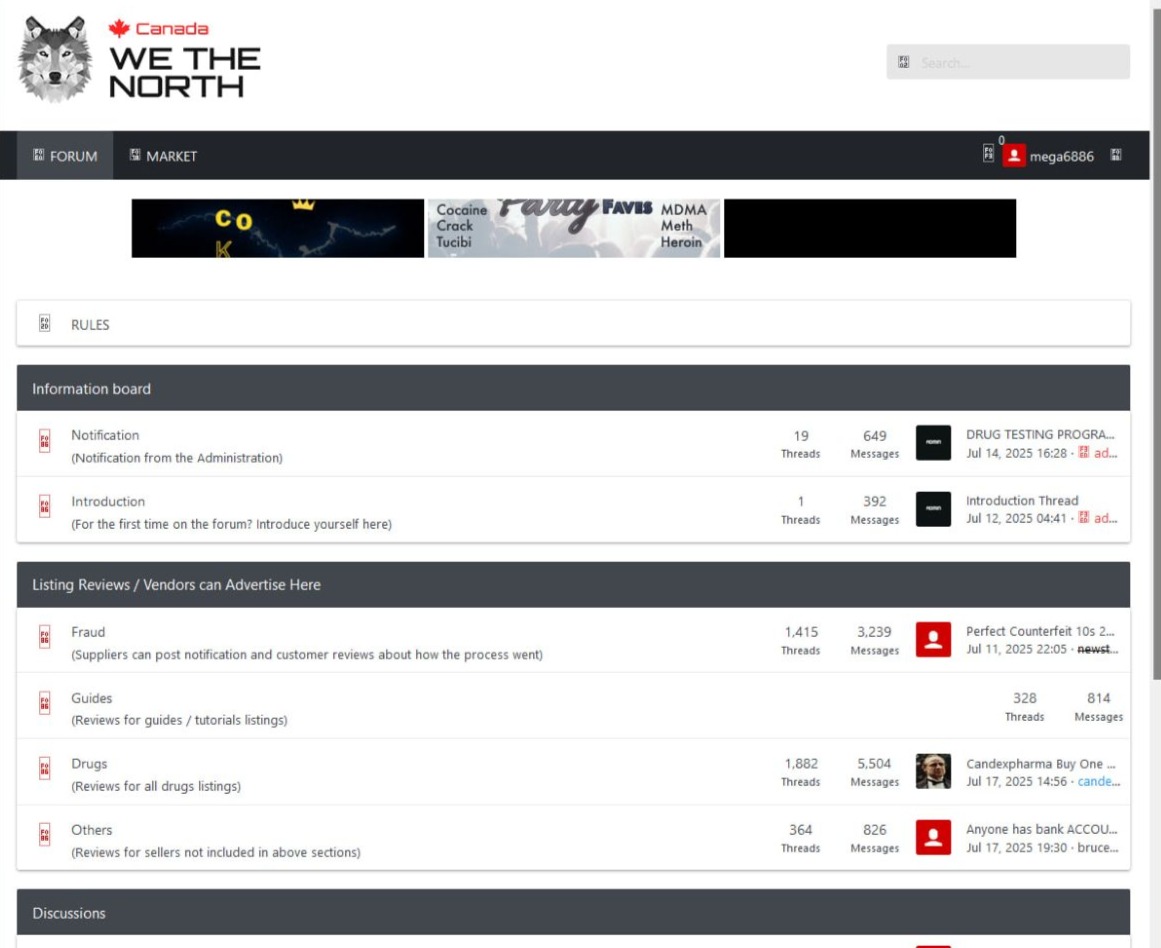
The supplied screenshot shows a structured web application rather than evidence of completed trade. Common visible patterns include catalogue navigation, account controls, vendor pages, order states, and support routes. These components mirror ordinary e-commerce design while shifting trust toward pseudonymous reputation and platform-controlled escrow.
- Regional Positioning
- Vendor Ratings
- Escrow Ordering
A Wethenorth Access label describes the network context, not a security certification. Tor can conceal network location, yet account recovery, browser compromise, malicious files, financial records, and operational mistakes remain outside that protection. Likewise, escrow changes who temporarily controls funds but cannot guarantee honest administration.
Documented Wethenorth Onion hostnames
Open-source indexes and archival discussions associate this service with the following Tor v3 hostname identifier. Publication here records what public sources have already circulated. A correctly formatted address does not prove ownership, uptime, or safety, and phishing copies often reuse similar branding.
Readers should treat every hostname string as an unverified label until independent, dated evidence confirms control. DNMarketInfo does not verify live reachability and does not provide usage instructions.
Evidence limits and reported statistics
Listing totals can include duplicates, inactive products, and automated imports. Vendor counts may include dormant or banned accounts. Uptime monitors sample from specific networks and can misclassify maintenance, denial-of-service disruption, or a local connection failure. Transaction volume is even harder to validate when records are private or privacy coins are involved.
Wethenorth Darknet statistics should therefore be described as reported, observed, or self-claimed. Geographic claims, user counts, and operating status are difficult to validate outside the service. DNMarketInfo labels metrics as open-source observations rather than audited facts. Readers can compare this methodology with the broader darknet marketplace overview and the privacy coin reference.
Why does this model remain high risk?
Anonymous services expose users to phishing, malware, fraud, impersonation, loss of escrow, and law-enforcement action. Product claims may also be false, and unregulated substances can contain unexpected compounds or concentrations. Interface polish does not reduce these risks.
Defensive readers can review the operational security guide for lawful privacy practices and the drug safety and first-aid guide for emergency information. Neither resource makes illegal activity safe. Documented hostnames are archival identifiers only; this profile remains analysis, not access assistance.
Research summary
The strongest supportable conclusion is narrow: public material associates the name with a marketplace-style hidden service, preserves interface captures, and circulates specific hostname strings. Ownership, live inventory, user totals, and present availability remain uncertain. Read Wethenorth Darknet as a dated open-source case study, never as a recommendation or verification.
Common questions
What can be confirmed about WeTheNorth?
Is WeTheNorth independently verified?
No. Wethenorth Mirror figures and operating claims are not independently audited. Public sources can document captures, announcements, and enforcement records, but they cannot guarantee who controls a service or whether it is currently available.
What does the archived interface show?
The capture shows a catalogue-style interface associated with Wethenorth Access reporting at one date. It can illustrate navigation and account features, but it cannot verify transactions, inventory, ownership, or later changes.
Do published hostnames prove a live Wethenorth Onion service?
No. Documented hostnames are public identifiers circulated in open sources. They can be outdated, cloned, or phishing copies. This profile records them for research context and does not confirm reachability or endorse use.